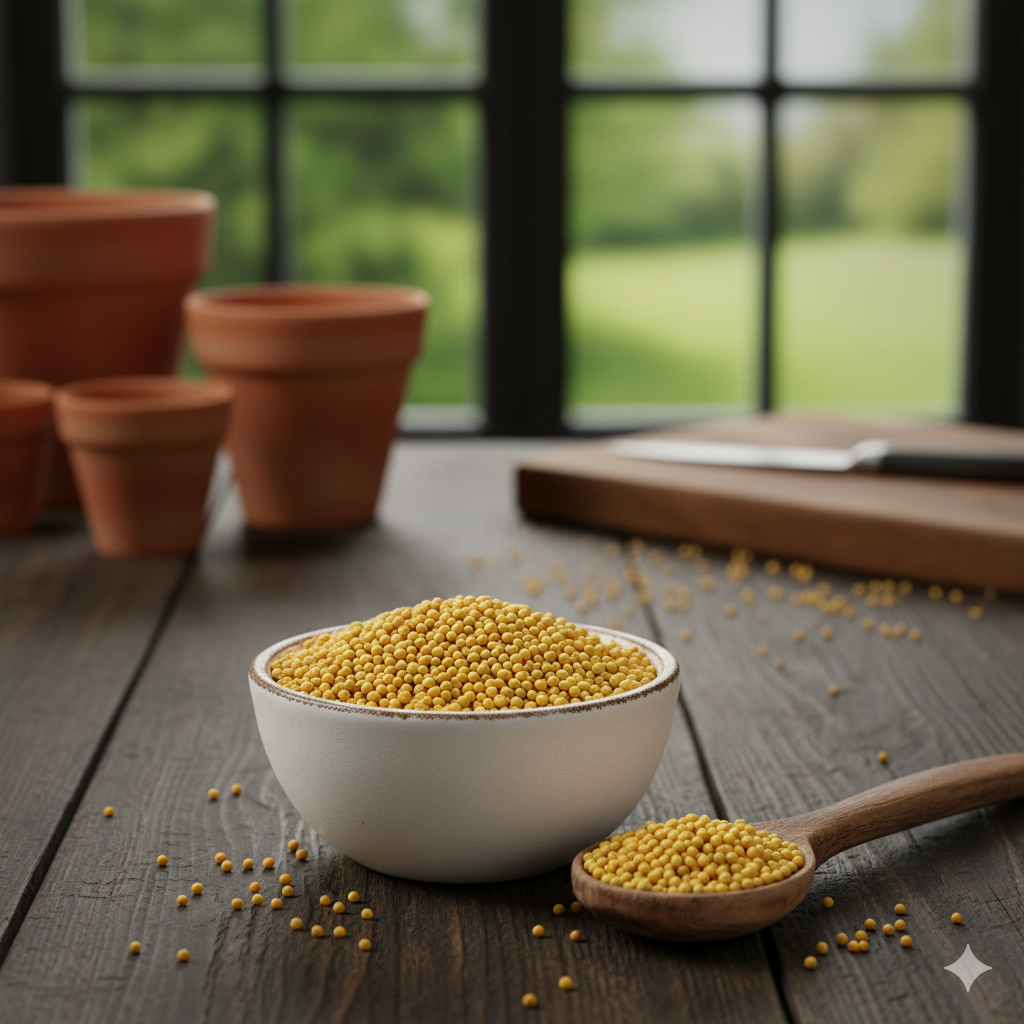
Description
Latin (botanical) name :Sinapis alba (aka Brassica hirta)
Introduction
Yellow mustard (Sinapis alba or Brassica hirta) is the mildest of the mustard varieties, with a slightly tangy and earthy flavor. It is commonly used in Western cuisine, especially in condiments like classic yellow mustard sauce. Its seeds are larger and lighter in color compared to brown and black mustard seeds.
Key Benefits
-
Good source of dietary fiber, selenium, and magnesium.
-
Contains natural antioxidants that may help reduce oxidative stress.
-
Traditionally used to aid digestion and stimulate appetite.
-
Known for mild anti-inflammatory properties.
Where It’s Used
-
Condiments: The main ingredient in classic yellow mustard sauce.
-
Culinary: Adds mild pungency to salad dressings, sauces, marinades, and pickles.
-
Baking: Ground mustard is sometimes added to bread and pretzels for tang.
-
Pickling: Whole seeds are a staple in spice blends for preserving vegetables.
Available Form
-
Ground
Additional Information / Fun Facts
-
Yellow mustard is often called “white mustard,” though the seeds are pale yellow.
-
It’s the most commonly used mustard in the US for hot dogs and sandwiches.
-
Ancient Greeks and Romans valued mustard for both culinary and medicinal purposes.
-
Mustard seeds swell when soaked, releasing mucilage that gives sauces their creamy texture.